
WHITE PAPERS & GUIDES BISIONA
Tenders Management & Monitoring: Keys to success

Tenders are becoming increasingly relevant for purchasing in the healthcare & pharmaceutical sector. To ensure profitable growth, pharmaceutical companies need to strive for tender management excellence.
Thus, companies need to adapt to new competitive environments, where tendering have become the new standard procurement practice.
However, this is not an easy task. Pharmaceutical companies have to deal with multiple stakeholder involvement, limited stakeholder access, and varying processes across markets and countries.
Therefore, companies need to formulate localized tenders strategies. Furthermore, the tender structure needs to be carefully analyzed to capture relevant differentiation.
That’s why equipping your organization with the right system will help you develop a structured and proactive tendering strategy.
Tender management system: New Opportunities
Integrating a tenders management system into your company’s processes will bring you many advantages and benefits such as:
- Interaction with the process, its phases and stakeholders during the whole tenders’ life.
- Analysis of the characteristics and attributes such as offers markers, prices, assignment criterias, competitors, etc.
- Integration of all sources of information and interest, keeping them uptades and operating as a single point of management for the company.
But, does all tenders management systems include these features? Not really.
What should we look for in a tender management system?
Therefore, in order to make the decision process easier for companies when analyzing and looking for a good tender management system, at BISIONA we have developed a free guide where we explain what the functionalities are and the keys to follow to achieve efficient management and monitoring of bidding processes in the Pharmaceutical industry.



Workflow in tendering: structure, control and operational efficiency
BLOG BISIONA What does the workflow involve? The concept of workflow as applied to tender management does not involve automating the preparation of the tender itself. The technical proposal, the analysis of evaluation criteria and the drafting of the distinctive...
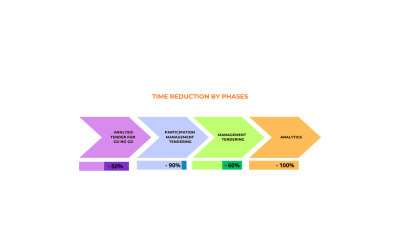
Managing participation in a tender: The set of processes that takes up the most time and offers the greatest potential for savings
BLOG BISIONA A structured overview of the process, the four main components that make it up, and the potential for optimisation that few organisations exploitWe have estimated an average of 18.5 hours of work, making this the most time-consuming stage of the process,...

Taking part in public tenders: What does it actually cost, and where is there room for improvement?
BLOG BISIONA A structured overview of the process, the four main components that make it up, and the potential for optimisation that few organisations exploitIf your company actively participates in public tenders, you probably feel that the process consumes a great...
Workflow in tendering: structure, control and operational efficiency
BLOG BISIONA What does the workflow involve? The concept of workflow as applied to tender management does not involve automating the preparation of the tender itself. The technical proposal, the analysis of evaluation criteria and the drafting of the distinctive...
Managing participation in a tender: The set of processes that takes up the most time and offers the greatest potential for savings
BLOG BISIONA A structured overview of the process, the four main components that make it up, and the potential for optimisation that few organisations exploitWe have estimated an average of 18.5 hours of work, making this the most time-consuming stage of the process,...