
COUNTRY OUTLOOK & REPORTS
Country Outlook: UK
Overview: Country Outlook UK
The pharmaceutical market is a critical sector for the UK economy, from 2018 to 2023 its value is forecasted to increase by 19,3%, up to £25bn. The sector represents a great part of the UK exports, being the US and the EU its major importers.
However, the Brexit caused a great deal of uncertainty in the UK pharma sector. Indeed, EU funding, which accounted for €4bn in 2020, will not longer be an option for pharmaceutical enterprises and universities. Moreover, newly needed custom inspections will considerably increase operational cost, as the EU market represents 63% of total UK pharmaceutical trade.
Therefore, the country will probably focus on emerging markets, such as China, India and Brazil, as new export destinations.

The pharmaceutical market in figures: Country Outlook UK

Market Opportunities & Trends: Country Outlook UK
New technologies and emerging trends, such as robotics, artificial intelligence and precision medicine, are the upcoming challenges of the UK pharmaceutical industry.
On the one hand, medical insurance companies, drug delivery device developers, pharmaceutical companies and clinics are increasingly developing big data exploitation, artificial intelligence and machine learnings to improve their operations with mining of patient data.
On the other hand, pharmaceutical companies are looking for manufacturing technology automation and digital devices for patient monitoring.
All these new trends combined with Brexit challenges result in UK pharmaceutical companies looking to become more cautious in their spending and outsource manufacturing to Contract Development & Manufacturing Organisations (CDMOs).



Workflow in tendering: structure, control and operational efficiency
BLOG BISIONA What does the workflow involve? The concept of workflow as applied to tender management does not involve automating the preparation of the tender itself. The technical proposal, the analysis of evaluation criteria and the drafting of the distinctive...
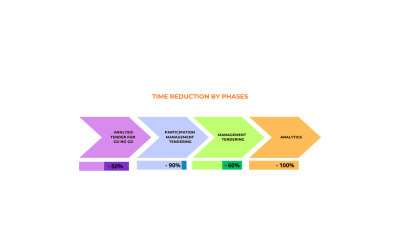
Managing participation in a tender: The set of processes that takes up the most time and offers the greatest potential for savings
BLOG BISIONA A structured overview of the process, the four main components that make it up, and the potential for optimisation that few organisations exploitWe have estimated an average of 18.5 hours of work, making this the most time-consuming stage of the process,...

Taking part in public tenders: What does it actually cost, and where is there room for improvement?
BLOG BISIONA A structured overview of the process, the four main components that make it up, and the potential for optimisation that few organisations exploitIf your company actively participates in public tenders, you probably feel that the process consumes a great...
Workflow in tendering: structure, control and operational efficiency
BLOG BISIONA What does the workflow involve? The concept of workflow as applied to tender management does not involve automating the preparation of the tender itself. The technical proposal, the analysis of evaluation criteria and the drafting of the distinctive...
Managing participation in a tender: The set of processes that takes up the most time and offers the greatest potential for savings
BLOG BISIONA A structured overview of the process, the four main components that make it up, and the potential for optimisation that few organisations exploitWe have estimated an average of 18.5 hours of work, making this the most time-consuming stage of the process,...