
COUNTRY OUTLOOK & REPORTS
Country Outlook: Germany
Overview
Germany is recognised as one of the most developed and innovative countries in the world, and one the strongest market in the pharmaceutical sector.
The german pharma industry constitutes the major European pharmaceutical market and the fourth largest worldwide. Only after the United States, China and Japan.
Combining cutting edge-innovation, long traditional expertise in the pharma sector, and recognised as the “world´s pharmacy”, Germany demand of healthercare products is continuously growing. Becoming the ideal destination for pharmaceutical R&D, production, and business development.

The pharmaceutical market in figures

Market Opportunities & Trends
With 83 million inhabitants, Europe’s most populous country also represents the biggest healthcare market in the euro region.
With an expenditure that is continuously rising, Germany offers interesting opportunities for international companies operating in the pharmaceutical market.
Between 2013 and 2018, the country’s healthcare expenditure grew by almost 4.4 percent per year on average. Reaching a new high of EUR 390.6 billion in 2018. Accounting for almost 12 percent of German GDP.
Driven by developments like demographic change, the growing prevalence of chronic diseases, and the Covid-19 outbreak, this upwards trend in annual German health expenditure is expected to continue, after exceeding the EUR 400 billion mark in 2019.



Workflow in tendering: structure, control and operational efficiency
BLOG BISIONA What does the workflow involve? The concept of workflow as applied to tender management does not involve automating the preparation of the tender itself. The technical proposal, the analysis of evaluation criteria and the drafting of the distinctive...
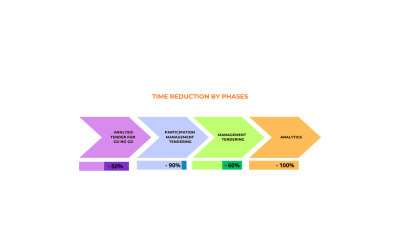
Managing participation in a tender: The set of processes that takes up the most time and offers the greatest potential for savings
BLOG BISIONA A structured overview of the process, the four main components that make it up, and the potential for optimisation that few organisations exploitWe have estimated an average of 18.5 hours of work, making this the most time-consuming stage of the process,...

Taking part in public tenders: What does it actually cost, and where is there room for improvement?
BLOG BISIONA A structured overview of the process, the four main components that make it up, and the potential for optimisation that few organisations exploitIf your company actively participates in public tenders, you probably feel that the process consumes a great...
Workflow in tendering: structure, control and operational efficiency
BLOG BISIONA What does the workflow involve? The concept of workflow as applied to tender management does not involve automating the preparation of the tender itself. The technical proposal, the analysis of evaluation criteria and the drafting of the distinctive...
Managing participation in a tender: The set of processes that takes up the most time and offers the greatest potential for savings
BLOG BISIONA A structured overview of the process, the four main components that make it up, and the potential for optimisation that few organisations exploitWe have estimated an average of 18.5 hours of work, making this the most time-consuming stage of the process,...