
Analytics in Jobs in the Pharmaceutical Industry
With the help of data analytics, Big Data or Business Intelligence, many daily processes in companies and organizations can be optimized, which can result in a better use of resources and an increase in business.
The Pharmaceutical industry is not excluded from these possibilities. And it is that this sector has a series of peculiarities that makes the knowledge of insights and the analysis and management of data more necessary than ever.
Specifically, the implementation of this type of tools in an organization can improve and enhance decision-making processes. Some of the benefits that can be obtained are:

More efficient management of the configuration and distribution of incentives
More precise definition and optimal monitoring of sales objectives
Thus contributing to an increase in business volume.
More efficient management of the organization's budgets
Making forecasts with configurable parameters
That will allow your company to make decisions more accurately based on the analysis of historical data.
And these are just some of the many advantages that can be achieved with the implementation of Business Intelligence and Analytics models in the Pharmaceutical industry.
At BIsiona, we have multiple solutions based on BI and Artificial Intelligence, which will allow your company to optimize and improve daily processes.
Our Performance Measurement module is a comprehensive and flexible solution specifically designed to meet the needs of the Pharmaceutical Industry, and with which you can achieve more efficient management of sales objectives and incentives.

Workflow in tendering: structure, control and operational efficiency
BLOG BISIONA What does the workflow involve? The concept of workflow as applied to tender management does not involve automating the preparation of the tender itself. The technical proposal, the analysis of evaluation criteria and the drafting of the distinctive...
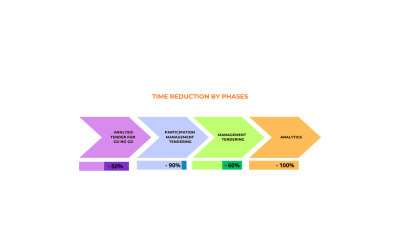
Managing participation in a tender: The set of processes that takes up the most time and offers the greatest potential for savings
BLOG BISIONA A structured overview of the process, the four main components that make it up, and the potential for optimisation that few organisations exploitWe have estimated an average of 18.5 hours of work, making this the most time-consuming stage of the process,...

Taking part in public tenders: What does it actually cost, and where is there room for improvement?
BLOG BISIONA A structured overview of the process, the four main components that make it up, and the potential for optimisation that few organisations exploitIf your company actively participates in public tenders, you probably feel that the process consumes a great...
Workflow in tendering: structure, control and operational efficiency
BLOG BISIONA What does the workflow involve? The concept of workflow as applied to tender management does not involve automating the preparation of the tender itself. The technical proposal, the analysis of evaluation criteria and the drafting of the distinctive...
Managing participation in a tender: The set of processes that takes up the most time and offers the greatest potential for savings
BLOG BISIONA A structured overview of the process, the four main components that make it up, and the potential for optimisation that few organisations exploitWe have estimated an average of 18.5 hours of work, making this the most time-consuming stage of the process,...