
WHITE PAPERS & GUIDES BISIONA
Pharma Data-Driven Future Outlook

Introduction
The impact of technological innovation in the pharmaceutical sector remains profound and far-reaching. In recent years, most pharmaceutical companies have integrated advanced tools such as Artificial Intelligence (AI) and Machine Learning (ML) into their processes.
These technologies have been applied in various aspects, including drug discovery, clinical trials, and personalized medicine. However, despite these advancements, the adoption of these technologies is still relatively low compared to other industries.
The primary reason for this lag is the uncertainty among leaders responsible for the digitalization and automation of pharmaceutical companies. While there is a clear willingness to adopt these technologies, there is significant uncertainty about how to effectively approach and implement them.
This article explores how the use of data and AI models can help pharmaceutical companies overcome future challenges and how pharma leaders should reimagine their strategies to build scalable capabilities. By embracing AI and ML, pharmaceutical companies can unlock new opportunities for innovation, efficiency, and improved patient outcomes.
Outdated Blockbuster Model
Although many pharmaceutical companies already use AI and ML to some extent, a significant number still operate under an outdated blockbuster model. This model involves producing large-scale generic drugs for mass prescription, aiming to serve a broad population with a single solution. However, this approach is becoming increasingly unsustainable for several reasons:
- Rising Production Costs
- Shifting Customer Preferences & Rise of Personalized Healthcare
- Unstructured Data
Emerging Opportunities: AI and Data-Driven Solutions
AI is emerging as a significant transformative force in the pharmaceutical industry. Despite the rapid increase in the adoption of AI and Natural Language Processing (NLP) systems, overall adoption remains low. Many pharmaceutical companies are not yet prepared to meet industry demands or overcome challenges effectively. However, they could achieve this by focusing on building greater AI and data analysis capabilities. Embracing these technologies can drive innovation, improve efficiency, and enhance patient outcomes.

Workflow in tendering: structure, control and operational efficiency
BLOG BISIONA What does the workflow involve? The concept of workflow as applied to tender management does not involve automating the preparation of the tender itself. The technical proposal, the analysis of evaluation criteria and the drafting of the distinctive...
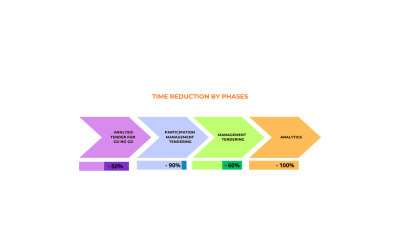
Managing participation in a tender: The set of processes that takes up the most time and offers the greatest potential for savings
BLOG BISIONA A structured overview of the process, the four main components that make it up, and the potential for optimisation that few organisations exploitWe have estimated an average of 18.5 hours of work, making this the most time-consuming stage of the process,...

Taking part in public tenders: What does it actually cost, and where is there room for improvement?
BLOG BISIONA A structured overview of the process, the four main components that make it up, and the potential for optimisation that few organisations exploitIf your company actively participates in public tenders, you probably feel that the process consumes a great...
Workflow in tendering: structure, control and operational efficiency
BLOG BISIONA What does the workflow involve? The concept of workflow as applied to tender management does not involve automating the preparation of the tender itself. The technical proposal, the analysis of evaluation criteria and the drafting of the distinctive...
Managing participation in a tender: The set of processes that takes up the most time and offers the greatest potential for savings
BLOG BISIONA A structured overview of the process, the four main components that make it up, and the potential for optimisation that few organisations exploitWe have estimated an average of 18.5 hours of work, making this the most time-consuming stage of the process,...